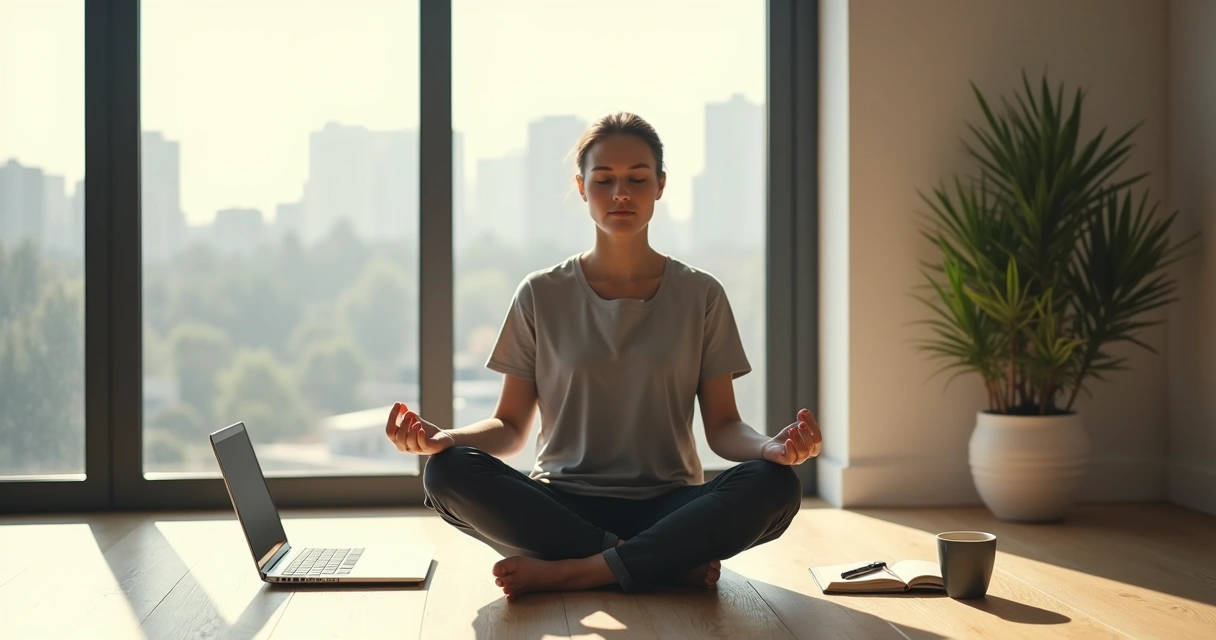

Stress often builds in silence. We notice the rushed mind, but we miss the jaw that is tight, the shoulders that keep rising, the stomach that feels hard. Then one small event happens and the whole system reacts. In our experience, body scan meditation helps interrupt that chain with surprising speed.
Body scan meditation is a simple practice of moving attention through the body to notice and soften tension.
It does not ask us to force calm. It asks us to notice what is already happening. That is why it works so well when stress feels immediate and physical.
We have seen this in ordinary moments. A person leaves a tense meeting, sits in the car for five minutes, and realizes the body is still fighting a conversation that has already ended. Another person wakes up at 3 a.m. with a racing mind, but the real signal is a clenched chest and shallow breath. The body often tells the truth first.
Stress speaks through the body.
Why body scan works fast
When stress rises, attention becomes narrow. We get trapped in the story, the fear, or the pressure. A body scan shifts attention from mental noise to direct sensation. This alone can reduce the spiral.
A rapid stress reset happens when we stop feeding the stress story and start sensing the body instead.
The practice also helps in three ways:
It slows automatic reactions by giving the mind one clear task.
It shows where tension is stored, which makes release easier.
It creates a gap between sensation and impulse, so we respond with more choice.
We do not need a perfect environment for this. We can do a short scan in bed, at a desk, on a train, or before a hard conversation. The point is not performance. The point is regulation.
How to do a rapid body scan
A full body scan can last twenty minutes or more, but a rapid reset can happen in three to seven minutes. That makes it practical for real life.
Start with a position you can hold without strain. Sitting is fine. Lying down is fine too. If you are at work, both feet on the floor usually help.
Then follow this sequence:
Pause and feel contact. Notice the chair, floor, or bed supporting you.
Take one slow breath out. Let the exhale be longer than the inhale.
Move attention to the forehead, jaw, neck, and shoulders.
Scan down through chest, belly, back, hips, and legs.
Notice sensations without trying to fix them right away.
Where you find tension, soften around it with the next breath.
Finish by sensing the body as a whole for a few seconds.
That is enough. We are not trying to create a special state. We are helping the nervous system shift out of overload.
If it helps, name sensations in plain words: warm, tight, buzzing, heavy, numb, loose. Simple labels keep us present.
What to notice during the scan
Many people think they are failing if the body does not relax at once. We do not see it that way. The first win is awareness. If we notice tension clearly, the practice is already working.
Common signs of stress during a body scan include:
Tight jaw or pressed teeth
Raised shoulders
Fast or shallow breathing
Pressure in the chest
Knotted stomach
Restless legs or fidgeting hands
Sometimes the body feels dull instead of tense. That matters too. Numbness, heaviness, or disconnection can also be stress responses. We simply note them and keep going.

How to make it more effective
Small adjustments can help the body respond faster. We suggest keeping the method simple, but not careless.
Here are a few ways to improve the practice:
Exhale slowly through the mouth once or twice before starting.
Relax the tongue. It often releases jaw tension.
Uncross legs and arms to reduce subtle holding patterns.
Keep the face neutral, not effortful.
Return to the feet if the mind becomes noisy.
We also think it helps to lower expectations. Some scans bring relief in two minutes. Others simply prevent stress from getting worse. Both outcomes have value.
If you want a more focused guide, we suggest reading about body scan meditation in a way that supports steady practice rather than occasional use only.
Common mistakes to avoid
People often turn a body scan into another task to perform well. That creates more pressure. A few mistakes appear often, especially when stress is high.
Rushing through body parts without really sensing them
Trying to force relaxation
Judging sensations as bad or wrong
Stopping because the mind wandered once
The goal is not to empty the mind. The goal is to notice the body with honesty and steadiness.
We have also seen people skip the parts that feel uncomfortable. Yet those places often hold the most useful information. We do not need to stay there long, but we should acknowledge them.
When to use a rapid stress reset
This practice fits well into moments that normally get lost to reactivity. A short scan can change the quality of the next hour.
Good moments for a rapid reset include:
Before a meeting or presentation
After conflict or difficult news
During an afternoon energy crash
Before sleep when the body feels alert
Right after noticing anxious thoughts looping
We think this works best when used early, before stress becomes a full wave. A three minute scan at the first sign of overload can save us from carrying tension all day.

Building the habit without pressure
A rapid stress reset becomes more natural when we practice before we desperately need it. That does not mean long sessions every day. Short and regular usually works better.
We suggest choosing one anchor point in the day:
After waking up
Before lunch
After work ends
Keep it brief for one week. Three to five minutes is enough. Once the body learns the pattern, it starts recognizing the shift more quickly. If you want more ideas that pair well with this practice, these stress relief techniques can support a balanced routine.
Conclusion
Body scan meditation works because it brings us back to what stress is doing right now, not just what we are thinking about it. That shift can be fast, practical, and grounding. We notice tension, stop feeding it, and create space for a calmer response.
Some days the reset feels strong. Some days it feels modest. Still, each scan trains awareness, and awareness changes action. That is how a short pause becomes a real form of self-regulation.
Frequently asked questions
What is body scan meditation?
Body scan meditation is a mindfulness practice in which we move attention through different parts of the body and notice sensations without judgment. It helps us become aware of tension, discomfort, numbness, or ease. The method is simple and can be done sitting, lying down, or even during a short break.
How does body scan reduce stress?
It reduces stress by shifting attention away from racing thoughts and toward direct physical awareness. This can calm the stress response, slow breathing, and release muscular holding. When we notice tension early, we are less likely to keep reacting on autopilot.
How long should a body scan take?
A rapid body scan can take three to seven minutes. A longer practice may last fifteen to thirty minutes. For stress reset in daily life, short sessions are often enough to help the body settle and the mind regain clarity.
Can beginners try body scan meditation?
Yes, beginners can start with body scan meditation very easily. It does not require special knowledge or long experience. We suggest starting with a short practice and focusing on simple sensations like pressure, warmth, or tightness.
When is the best time to do it?
The best time is when stress first appears, such as before a hard task, after tension, or at night when the body will not settle. It also works well as a daily practice at the same time each day, which helps build familiarity and steadiness.